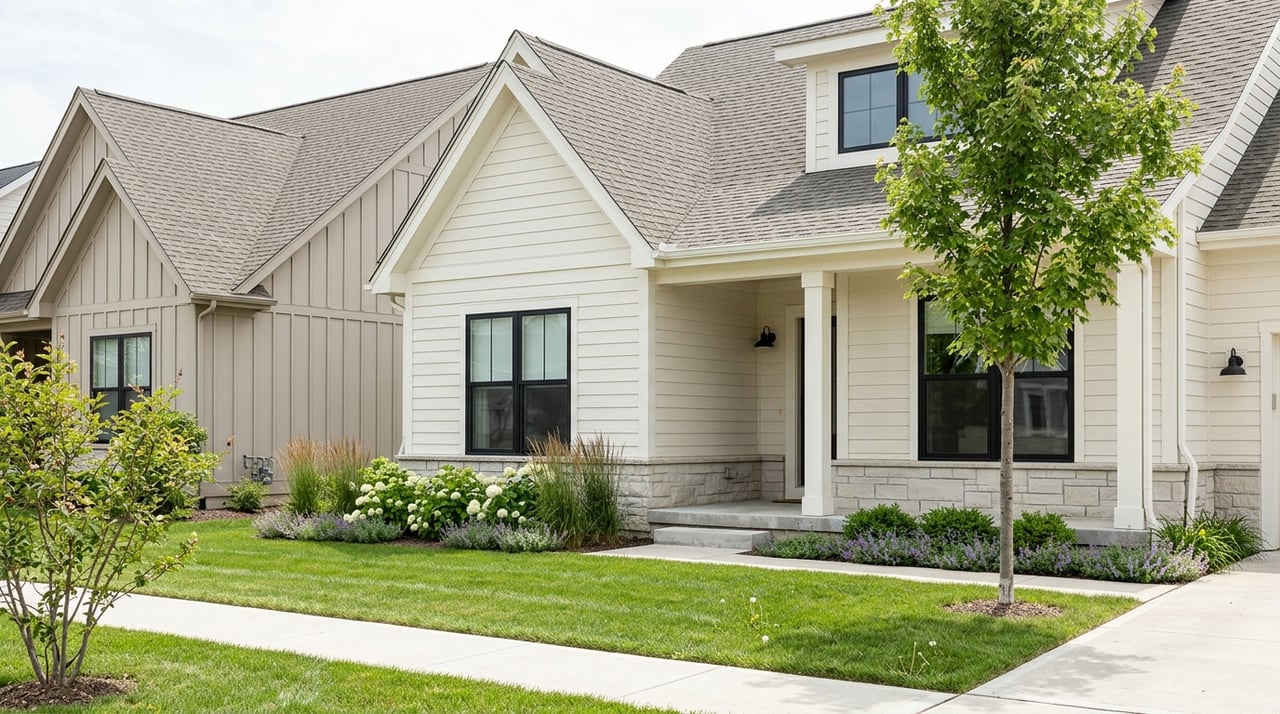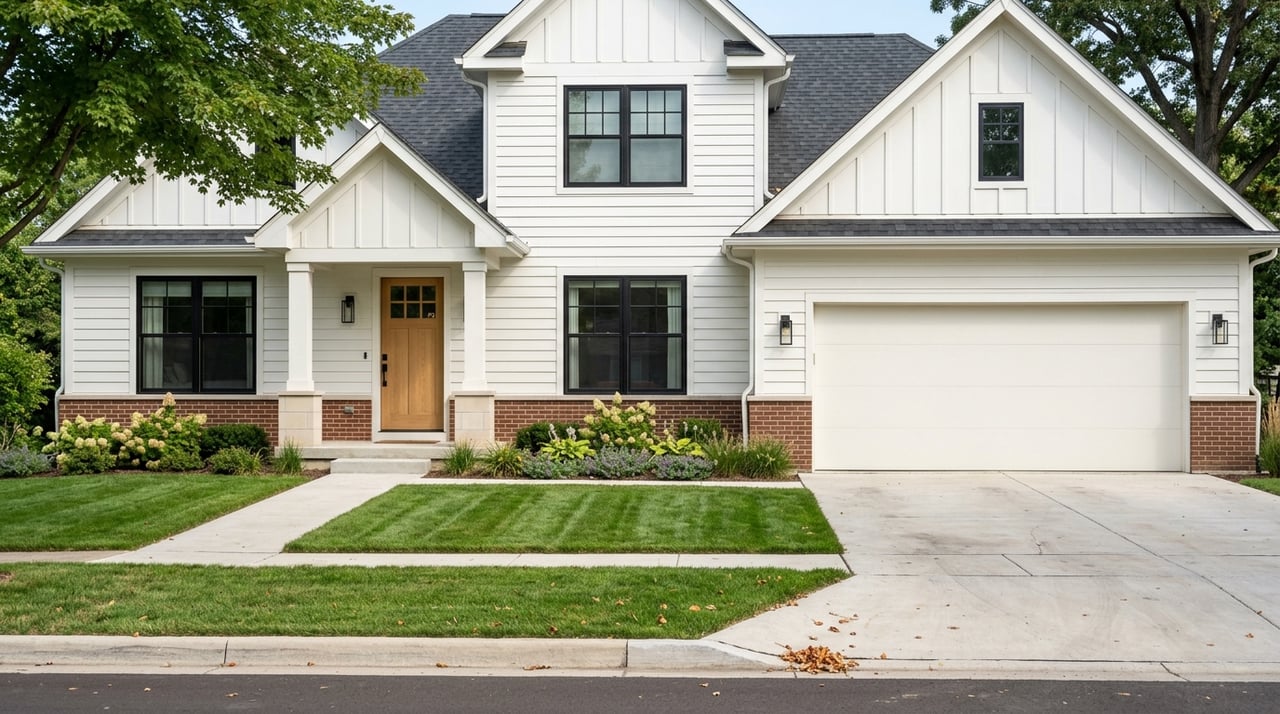
Thinking about leaving Madison for Middleton? You are not alone. A move just a few miles west can change your price point, housing options, commute pattern, and day-to-day feel, so it helps to know what actually shifts before you start touring homes. This guide breaks down what to expect in Middleton’s housing market, where different types of homes tend to show up, and how to narrow your search with a practical plan. Let’s dive in.
Why Middleton Feels Different
Middleton sits about 6 miles west of downtown Madison, with US 12/14 serving as the main West Beltline connection into Madison and I-39/90. That makes it a close-in move, but not a small one in housing terms.
Middleton’s mean travel time to work is 19.3 minutes, according to Census Reporter. For many buyers, that means you can stay connected to Madison while shifting into a different mix of neighborhoods, lot sizes, and home types.
What Middleton Costs Right Now
If you are moving from Madison, the first change you will likely notice is price. Over the three months ending May 2026, Middleton’s median sale price was $559,165, compared with Madison’s $439,737.
Homes in Middleton averaged 55 days on market and sold at 100.1% of list price in that same period. Redfin describes the market as somewhat competitive, which points to a market where pricing still matters, but buyers may have a little more room to compare options than in a faster-moving environment.
There is another useful data point here. The ACS 2024 5-year estimate places Middleton’s median value of owner-occupied housing units at $484,200, which is below the more recent sale median. In practical terms, that suggests buyers should expect to pay a premium for updated, move-in-ready, or newly built homes compared with the broader citywide housing stock.
Expect More Than Single-Family Homes
A common mistake is assuming Middleton is mostly detached suburban houses. The data shows a more mixed housing market than many buyers expect.
Census Reporter shows 10,793 housing units in Middleton, and 56% of occupied units are in multi-unit structures. That means condos, apartments, and attached homes are a meaningful part of the local housing picture, not just a side category.
The city’s planning history supports that mix. Middleton’s comprehensive plan notes that in 2000, the city was 50% single-family and 46% multi-family, so this blend is not new.
For you, that opens up more ways to move. Depending on your budget, maintenance goals, and space needs, your best fit could be a detached house, a townhome, a condo, or another attached option rather than the classic large-lot suburban model.
Home Types to Keep on Your List
If you are starting your search, keep your options broad at first. Middleton’s housing policies continue to support varied housing products, including smaller homes on smaller lots, tiny homes, ADUs, and missing-middle housing in new subdivisions.
That matters for several buyer groups:
- Move-up buyers may find detached homes in established or growing subdivisions.
- Downsizers may prefer lower-maintenance condos, townhomes, or ranch-style layouts when available.
- Buyers who want newer finishes may focus on newer construction and infill opportunities.
- Buyers who want less upkeep should not overlook attached housing in mixed-use or redevelopment areas.
Neighborhood Patterns Matter in Middleton
Middleton is not uniform. The city’s growth has been shaped by both downtown redevelopment and planned neighborhoods, which creates real variation in how different areas look and feel.
One often-cited example is Middleton Hills. A city landmarks packet describes it as Wisconsin’s first New Urbanism example, with smaller lots, narrower streets, and larger green spaces.
That makes it a useful reference point if you want a more walkable, design-conscious neighborhood pattern rather than a conventional large-lot subdivision. It also helps explain why two homes with similar square footage can feel very different based on block layout, lot placement, and surrounding public space.
Lot Sizes Are Not One-Size-Fits-All
If you are moving from Madison and picturing either a tight urban lot or a wide suburban yard, Middleton may land somewhere in between, depending on the area. The city’s housing affordability report notes that land on the outskirts varies by zoning, utility access, and minimum lot requirements.
In practice, you should expect a spectrum. Some areas have compact or infill lots, some offer more conventional suburban lot patterns, and some edge-of-city subdivisions may feel more spacious.
This is why online photos alone can mislead you. A practical home search in Middleton should weigh not just square footage and price, but also block pattern, lot size, street layout, and nearby land use.
Where to Start Your Search
The city’s official map divides Middleton into Northern Growth Areas, Central Areas, and Southern Areas, with subareas that include Far West, Near West / Downtown, Near East, Southwest / Golf Course, and Southeast. That framework is useful because it reflects the city’s real development pattern.
If you want closer-in or more established housing, start by watching Near West / Downtown, Near East, and the downtown core around the historic depot at 1811 Parmenter Street. These areas are more likely to appeal to buyers who want an established setting or easier access to daily errands and city amenities.
If your goal is newer construction, the clearest signals are in the western, northern, and southern growth areas. The city also points to active build-out in places like Pheasant Crossing and Redtail Ridge, both of which include parkland dedicated to the city.
If you are open to attached or mixed-use housing, the city’s housing affordability report identifies several infill or mixed-use opportunity areas:
- University Avenue Corridor
- Parmenter Corridor
- Allen/Century Corridor
- Southwest Quadrant
- Downtown Middleton
The Parmenter Corridor, in particular, is identified by the city as Urban Mixed Use. For buyers, that can signal a different housing form and streetscape than a standard subdivision search.
Commute Planning Should Shape Your Search
Because Middleton is so close to Madison, many buyers assume the commute will be easy from anywhere in the city. The bigger reality is that route choice matters.
For drivers, US 12/14 is the main spine between Middleton and Madison, and peak-hour congestion can affect your routine even if you live relatively close to the city line. That is one reason it helps to search with your actual work and errand patterns in mind, not just city boundaries.
Transit can also matter more than buyers expect. Metro Transit serves Middleton, and Route F and Route R connect west-side corridors with downtown Madison through Junction Park and Ride, Old Sauk, Old Middleton, Parmenter, Century, Allen, and University Avenue.
WisDOT also lists a Middleton park-and-ride at US 12/Parmenter Street with 48 stalls and trail access. If you want flexibility, that kind of option can make a meaningful difference in your weekly routine.
Walking and Biking Are Part of the Picture
Middleton also maintains a bicycle and pedestrian planning framework. For some buyers, that is not just a lifestyle bonus. It can affect how easily you handle short trips, connect to parks, or reduce car dependence for some errands.
If that matters to you, pay attention to how a home connects to surrounding streets, paths, and activity areas. Two homes at similar price points can offer very different day-to-day convenience depending on that local network.
Why Supply Trends Matter for Buyers
Middleton is actively treating housing supply as a planning issue. The city adopted a Housing Action Plan in 2026 and created an Affordable Housing Fund, which signals that infill, redevelopment, and a broader housing mix will likely remain part of the local conversation.
For buyers, that means Middleton should not be viewed as a static suburb with one housing formula. It is a nearby suburban city with established areas, walkable planned neighborhoods, mixed-use opportunity corridors, and ongoing edge development.
That is useful if you are trying to match a home to real-life priorities. Whether you want lower maintenance, newer construction, a shorter commute setup, or a different neighborhood pattern than Madison offers, Middleton gives you several paths to get there.
A Smart Madison-to-Middleton Buying Strategy
If you want to search efficiently, focus on the factors that change most from one Middleton area to another.
Start with this checklist:
- Set your price range with Middleton’s current premium over Madison in mind.
- Decide whether you want a detached home, condo, townhome, or another attached option.
- Rank commute needs for driving, transit, biking, and daily errands.
- Compare established central areas with newer growth areas.
- Look beyond finishes and study lot size, street pattern, and surrounding land use.
- Expect updated or newly built homes to command stronger pricing.
A practical move works best when you compare housing type, location, and commute as one decision, not three separate ones. That is especially true in Middleton, where the market is more varied than many buyers first assume.
If you are weighing a move from Madison to Middleton, Fred Van Buren can help you compare neighborhoods, housing types, and pricing with a clear local lens and straightforward guidance.
FAQs
What is the current home price difference between Madison and Middleton?
- Middleton’s recent median sale price was $559,165 over the three months ending May 2026, compared with Madison’s $439,737, so Middleton currently carries a noticeable price premium.
What kinds of homes can you find in Middleton, Wisconsin?
- Middleton has a mixed housing stock that includes detached houses, condos, apartments, townhomes, and other attached homes, with 56% of occupied units in multi-unit structures.
Which Middleton areas are best to start with for established homes?
- For closer-in or more established housing, the most relevant starting points are Near West / Downtown, Near East, and the downtown core around the historic depot on Parmenter Street.
Where should you look for newer construction in Middleton?
- The clearest areas to watch for newer construction are the western, northern, and southern growth areas, along with active subdivisions such as Pheasant Crossing and Redtail Ridge.
How should you think about commuting from Middleton to Madison?
- You should plan around your actual route, since US 12/14 is the main connection and peak-hour congestion can affect travel time, while Metro Transit and the Middleton park-and-ride can add flexibility for some commuters.
Are lot sizes consistent across Middleton neighborhoods?
- No. City planning documents indicate that lot sizes vary based on zoning, utility access, and minimum lot requirements, so different neighborhoods can feel quite different in layout and spacing.