Thinking about aging in place in Oregon, Wisconsin, or preparing your home to attract downsizers? You are not alone. Many buyers in our area want single-level living, safer bathrooms, and low-maintenance finishes that make day-to-day life easier now and later. In this guide, you will learn which age-friendly features add real value in Oregon, how to build them right for Wisconsin winters, and how to document upgrades so buyers feel confident. Let’s dive in.
Why these features add value in Oregon, WI
Oregon sits close to Madison’s healthcare, shopping, and services. That proximity makes accessible homes especially attractive to downsizers and multigenerational buyers. Buyers look for homes that reduce near-term modification costs, like a true no-step entry and a main-floor full bath.
Value here is twofold. You have functional quality that actually works for someone with mobility or vision changes. Then you have perceived quality, which comes from clean finishes and visible signs of professional work. Installations guided by recognized standards, such as AARP HomeFit principles or work completed by a Certified Aging-in-Place Specialist (CAPS), can reassure buyers.
High-value age-friendly features buyers want
No-step exterior entry
A zero-threshold entry is one of the most valuable upgrades. It allows access without stairs, which is safer in winter when ice makes steps risky. Look for a covered entry for snow protection, a well-insulated threshold, and grading or drainage that carries water away from the door.
Wider doors and smooth circulation
Buyers respond to wide, unobstructed pathways. A 36-inch clear door opening is ideal, while 32 inches clear is a commonly cited minimum. Aim for continuous 36-inch hallways and simple, open circulation.
Lever handles and easy controls
Lever or paddle-style door hardware is easy to operate with one hand. Rocker light switches and high-contrast, large-display thermostats are also simple, low-cost upgrades that improve daily comfort.
Curbless showers and safer baths
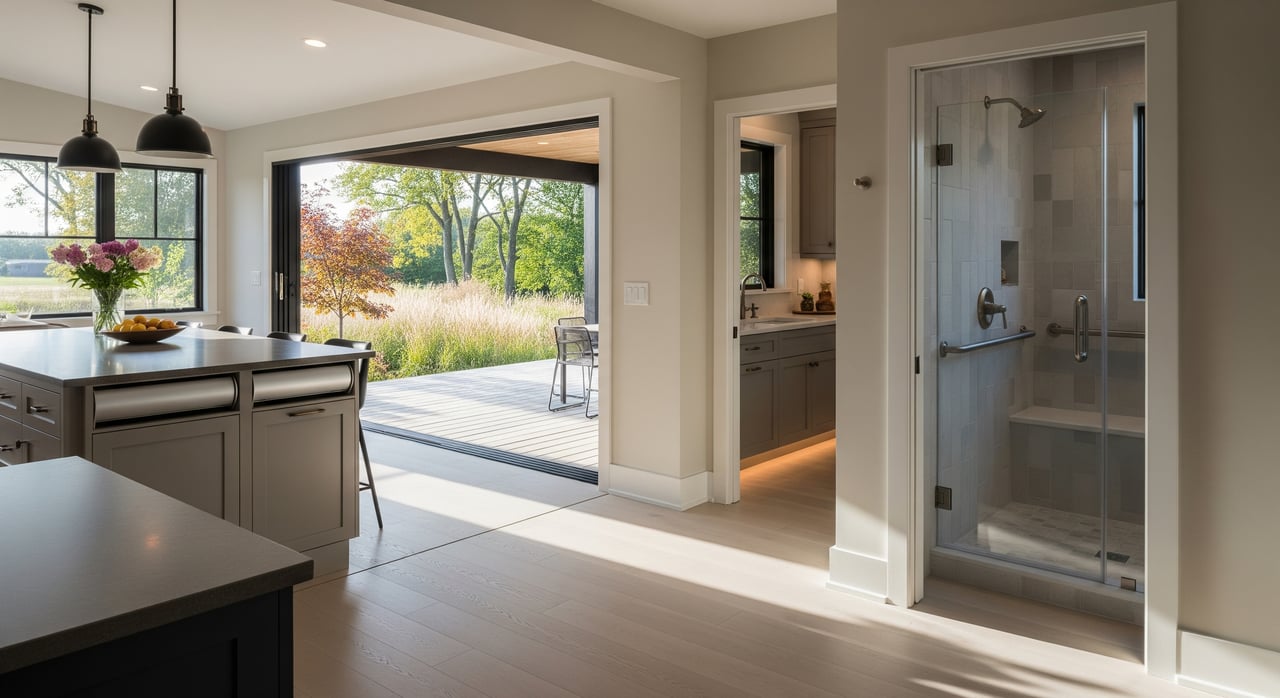
Curbless, roll-in showers reduce fall risk and make transfers easier. Buyers will check slope to drain, waterproofing, bench seating, grab bar placement, and enough turning space near fixtures. Non-slip tile and clear lighting matter too.
Solid grab bars with proper blocking
People want grab bars that feel secure. Reinforced blocking behind the walls provides a solid anchor and avoids the flimsy feel of poorly installed, afterthought bars. When possible, integrate bars so they look intentional and clean.
Single-level living essentials
A main-floor primary bedroom and bathroom are high priority. Main-level laundry and an easily accessed powder room add practical convenience that buyers value.
Flooring and transitions
Keep flooring on one plane wherever you can. Low-profile transitions reduce trip hazards and are smoother for wheelchairs and walkers. In our climate, resilient vinyl plank or engineered wood feels warmer underfoot. If you prefer tile, consider radiant heat in key areas.
Lighting and visibility
Layered, brighter light helps as vision changes with age. Non-glare fixtures and higher-contrast trim can improve depth perception and make stairs and edges easier to see.
Exterior and site details
A level driveway and a short, flat path to the entry are helpful. Exterior lighting, covered entries, and slip-resistant finishes help manage snow and ice. These are small touches that feel big during Wisconsin winters.
Specs that signal quality to buyers
Door widths and clearances
Aim for 36 inches clear where possible on primary pathways. Maintain 32 inches clear as a minimum in tighter locations. Provide 18 inches of clear space on the latch side of doors to help with maneuvering.
Ramps and slopes
For residential ramps, a 1:12 slope guideline (one inch of rise per foot of run) is commonly used. Shallower slopes are better when space allows. Include level landings at the top and bottom, and handrails if the rise and length meet local requirements.
No-step entry construction
Detail the threshold carefully. Provide positive drainage away from the door. Use an insulated, well-sealed threshold and a sill pan or drainage membrane where the floor meets the exterior. A covered entry extends the life of finishes and reduces ice buildup.
Curbless shower assembly
Design the shower with a continuous waterproof membrane that extends under the floor and up the walls. Target a slope of roughly 1/4 inch per foot to the drain. Include proper support for a bench and consider a linear drain if space is tight. Do not remove a curb without addressing the floor assembly and waterproofing.
Grab bars and blocking
Install bars into solid blocking behind the finished wall. Many public guidance documents cite loads in the range of 250 pounds. Follow the bar manufacturer’s instructions for residential installations.
Flooring and subfloor transitions
If you want flush transitions, plan the subfloor and underlayment so you can slope the shower pan while keeping adjacent floors level. Use slip-rated tile in wet areas and resilient or engineered wood in main spaces for warmth.
Heating and thermal comfort
Thermal breaks at thresholds and insulated floors are important in our climate. Radiant heat in bathrooms or main living areas improves comfort and reduces cold-floor concerns.
Built for Wisconsin winters
Freeze/thaw and moisture
Exterior thresholds and entry details need to handle water and ice. Use cold-climate-rated materials, high-performance flashing, and insulated, thermally broken systems. Good site grading and covered entries limit damage from freeze cycles and salt.
Durable materials
On the exterior, composite decking, PVC trim, fiber cement siding, and stainless or powder-coated hardware hold up better than untreated wood or plain steel. Inside, choose slip-resistant finishes for wet areas.
Warranties and workmanship
Keep records that clearly separate manufacturer warranties from installer warranties. Seek transferable product warranties when possible. For wet-area remodels, get a written scope of work, references, and proof of permit and inspection when required. Many contractors offer a 1- to 2-year workmanship warranty. You can negotiate longer coverage for specialized modifications.
Seasonal maintenance
Plan snow and ice strategies for no-step entries. Covered entries, heated mats or systems, textured surfaces, and adequate drainage all reduce maintenance and risk.
How buyers evaluate these upgrades
Buyers do not just look, they test. They open doors, measure clearances, try mock transfers in the shower, and check lighting and switches. They also look for professional finishes that signal durability and care.
Inspections and disclosure matter. A clean permit history, visible waterproofing details where appropriate, and warranty documentation build trust. Appraisers may not always give dollar-for-dollar credit for accessibility, but features that improve marketability, such as a main-floor primary suite or a true no-step entry, can help your home stand out against comparable sales.
Permits, code, and local resources
In the Village of Oregon, significant structural changes, exterior ramps, and bathroom remodels that alter drains or wall assemblies will typically require building permits and inspections. Follow Wisconsin energy and building code requirements when work affects the envelope or thresholds. Keep all records so you can show buyers a complete paper trail.
For financing, consider options such as FHA 203(k) or Title I loans for eligible improvements, VA Specially Adapted Housing or HISA grants for eligible veterans, and USDA Section 504 loans or grants in qualifying rural areas. State and local resources can also help. The Dane County Aging and Disability Resource Center (ADRC) can connect you with guidance and potential programs, and WHEDA may offer options that support affordability. Confirm current eligibility and terms before you begin.
Quick checklists you can use
For sellers planning upgrades
- Prioritize a main-floor full bath, no-step primary entry, main-level laundry, and wide circulation.
- Use cold-climate materials and detail thresholds, flashing, and waterproofing to prevent moisture issues.
- Pull permits as required and keep inspection records. Gather manufacturer and installer warranties.
- Hire experienced contractors. Consider those with CAPS credentials and strong references.
For buyers evaluating properties
- Try the space. Open doors, walk the path of travel, and test shower transfer and grab points.
- Confirm door widths, lighting quality, and the presence of a true no-step entry.
- Ask for documents. Review permits, warranty info, and any maintenance needs for snow and ice.
- If needed, bring an inspector or an occupational therapist to estimate retrofit costs.
For caregivers assessing usability
- Verify turning radii and transfer spaces near beds, toilets, and showers.
- Check grab bar placement and seat heights for stability.
- Confirm slip resistance in wet areas and adequate task lighting.
- Consider medication storage, emergency egress, and proximity to healthcare.
Put age-friendly value to work in Oregon
When you focus on the features buyers want, you make your home easier to live in today and more marketable tomorrow. The highest-impact upgrades in our market are clear: a true no-step entry, a safe and functional main-floor bath, and smooth circulation with smart hardware and lighting. Combine those with quality materials, proper permits, and warranties, and you give buyers confidence in both the home and the work behind it.
If you are weighing upgrades or searching for the right age-friendly home in Oregon or nearby Dane County communities, let’s talk. Get your free home valuation or ask for a practical plan tailored to your goals. Connect with Fred Van Buren for straightforward guidance grounded in construction know-how and local market insight.
FAQs
What age-friendly upgrades add the most value in Oregon, WI?
- Main-floor bedroom and bath, a no-step entry, and a safe, usable bathroom with a curbless shower tend to deliver the strongest market appeal.
How can I tell if a curbless shower is built correctly?
- Look for proper slope to drain, continuous waterproofing membranes, solid bench support, and secure grab bars installed into blocking.
Do wider doors really matter for resale?
- Yes. A 36-inch clear opening improves accessibility and signals thoughtful design. A 32-inch clear opening is a common minimum in tighter spaces.
How do Wisconsin winters change what I should build?
- Focus on covered entries, positive drainage, insulated thresholds, slip-resistant surfaces, and durable exterior materials that handle freeze/thaw cycles.
What permits and documentation should I keep for buyers?
- Keep building permits, inspection records, a written scope of work, contractor references, and manufacturer and workmanship warranties.
Are there financing programs for accessibility upgrades?
- Explore FHA 203(k) or Title I loans, VA SAH or HISA grants for eligible veterans, USDA Section 504 options in qualifying areas, and state or local resources through the ADRC and WHEDA.